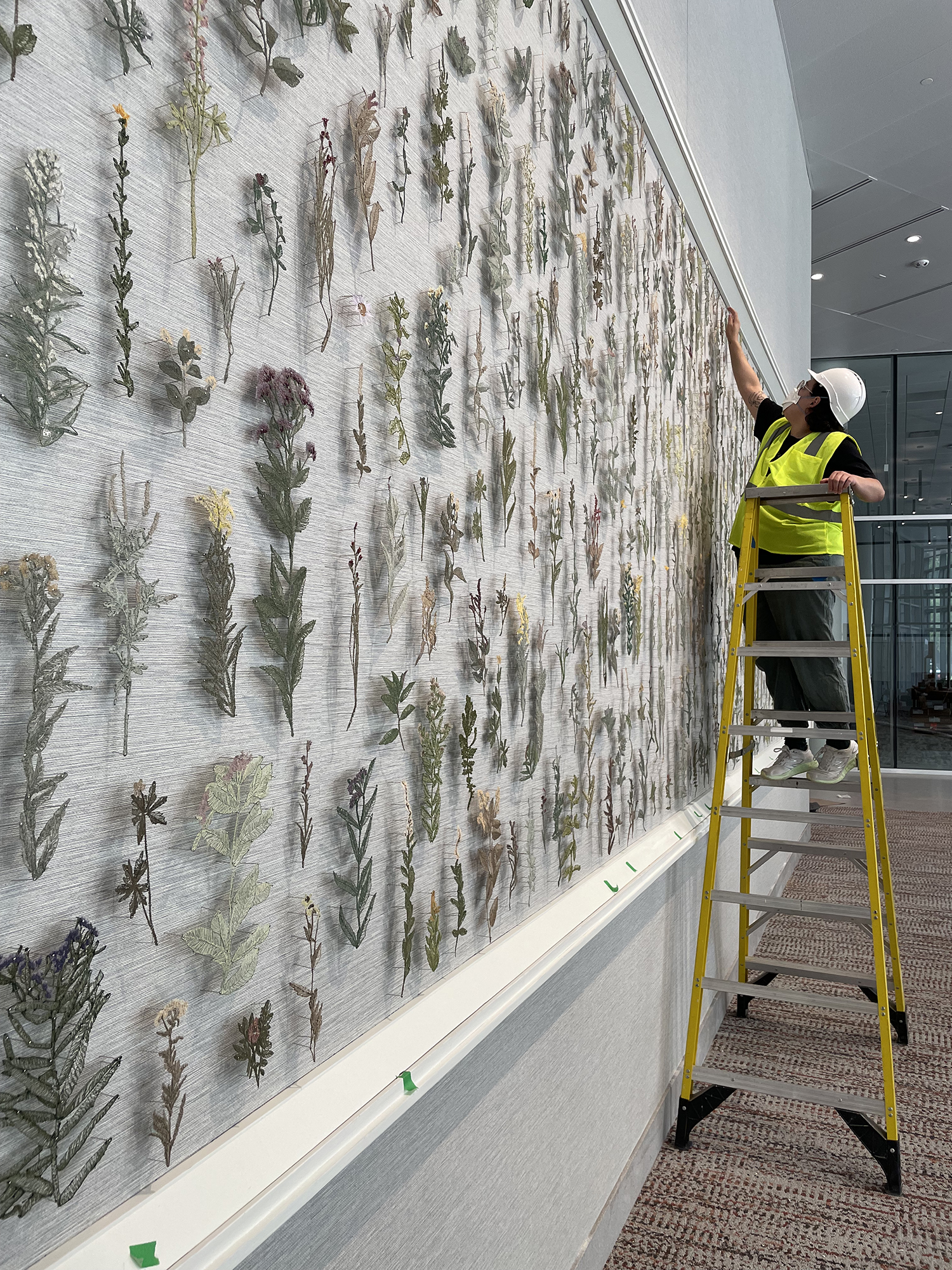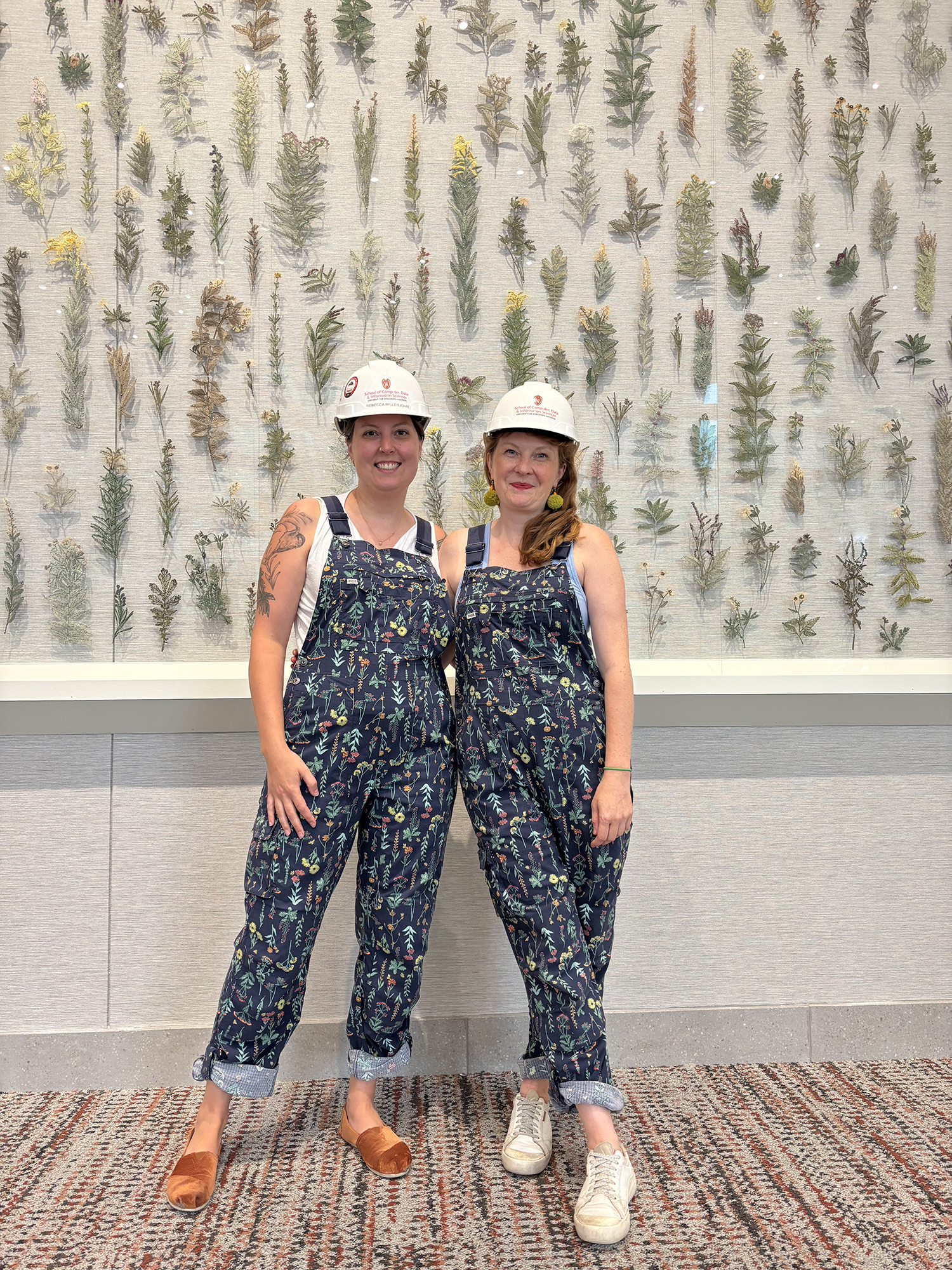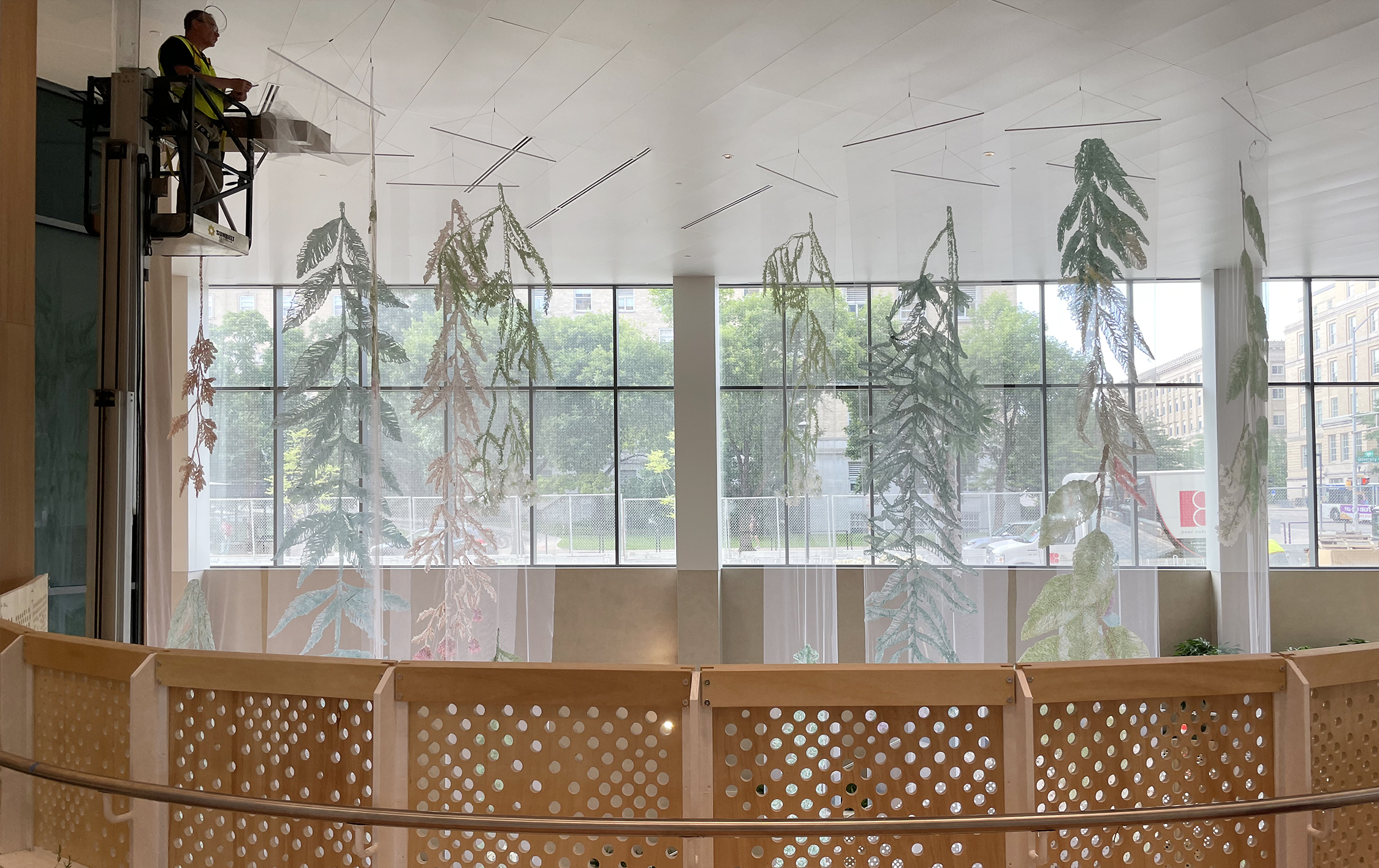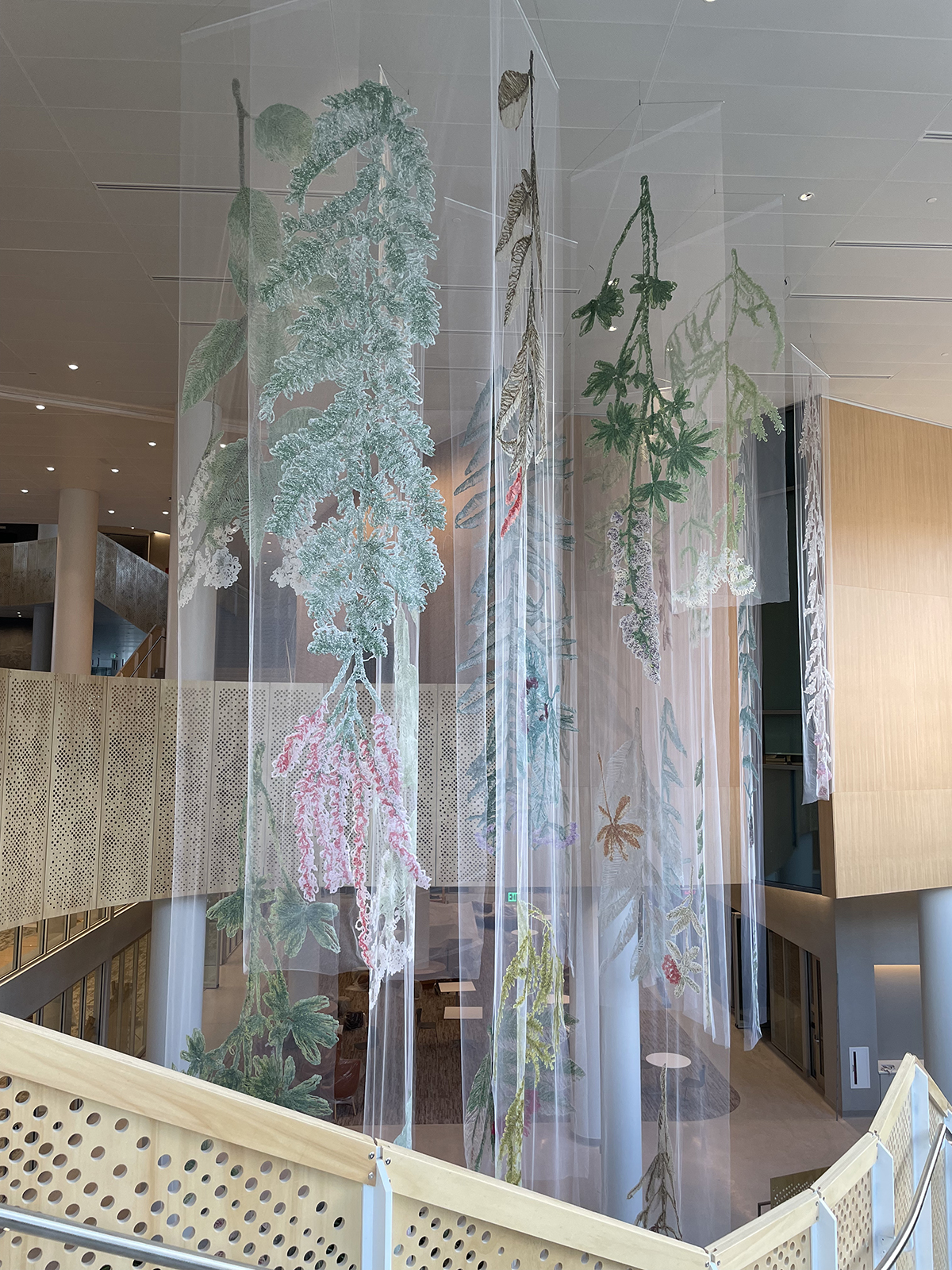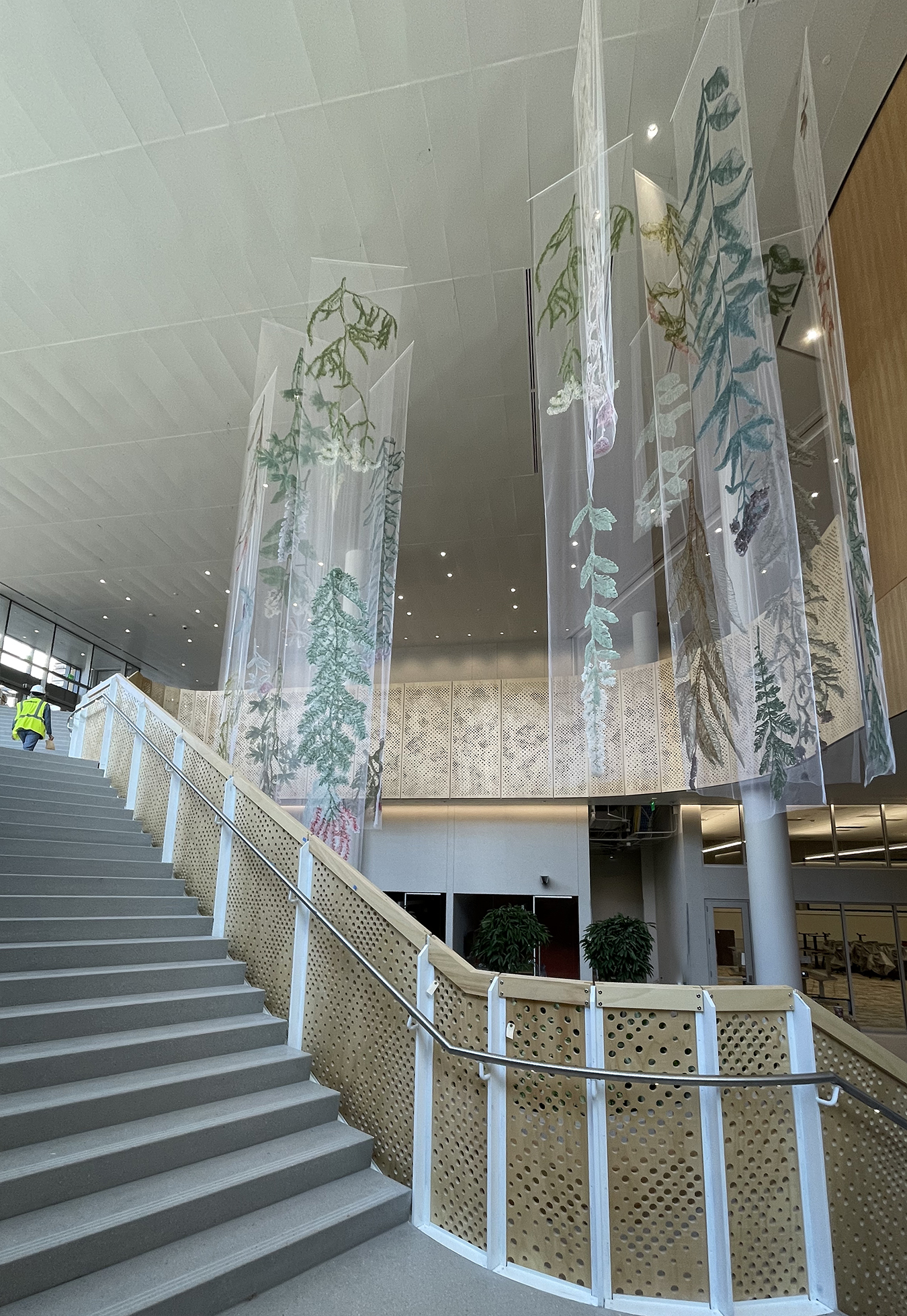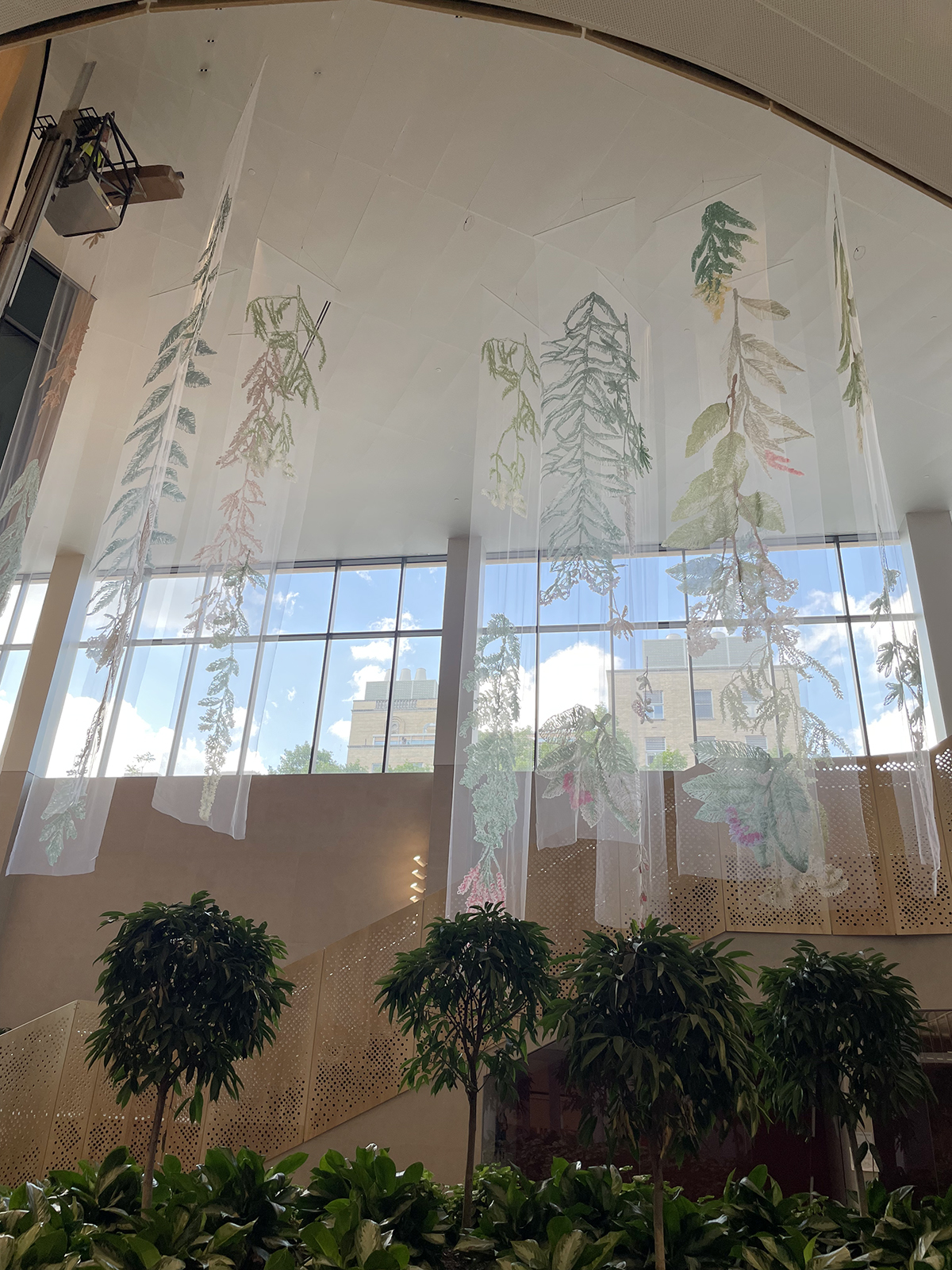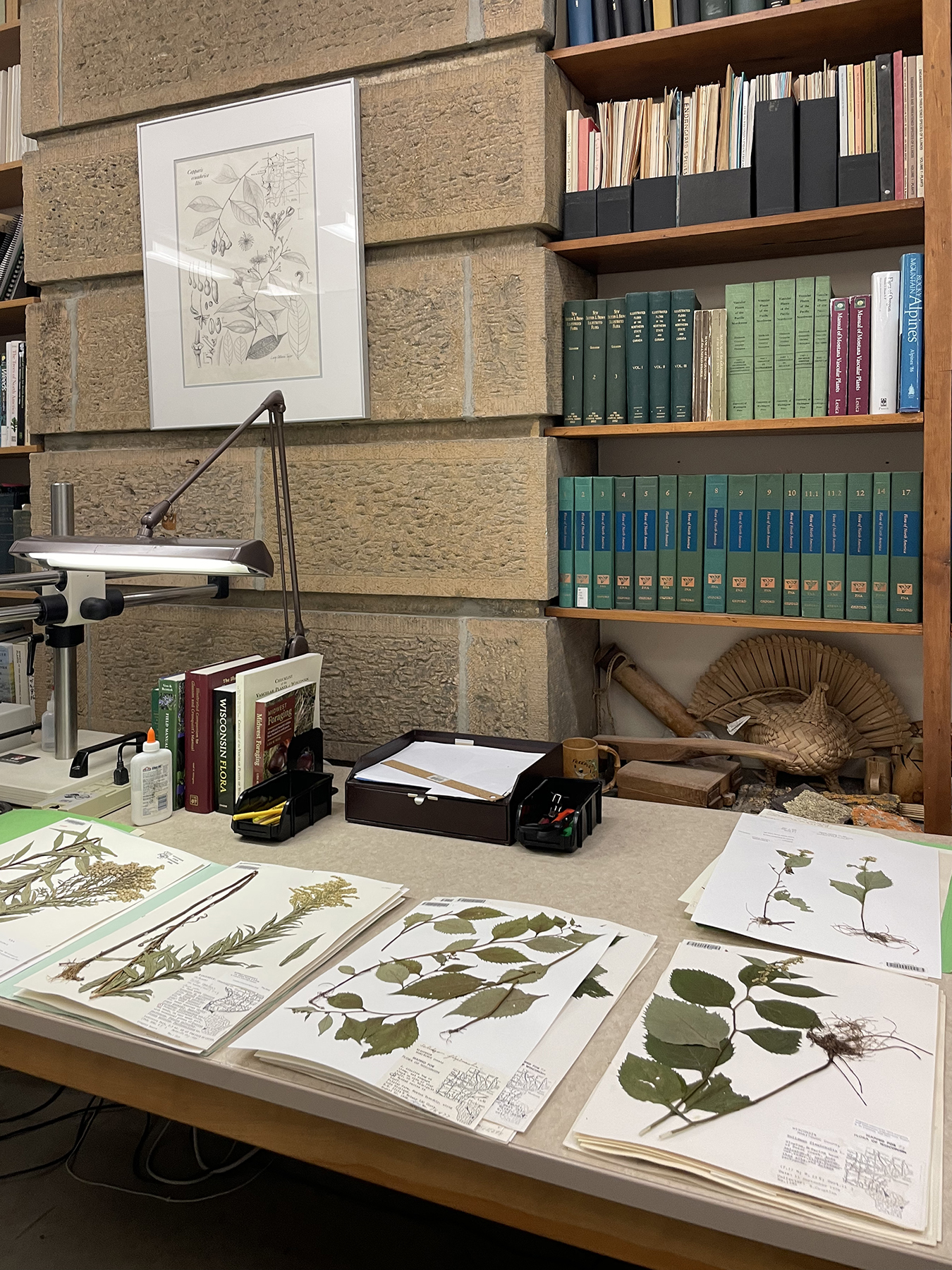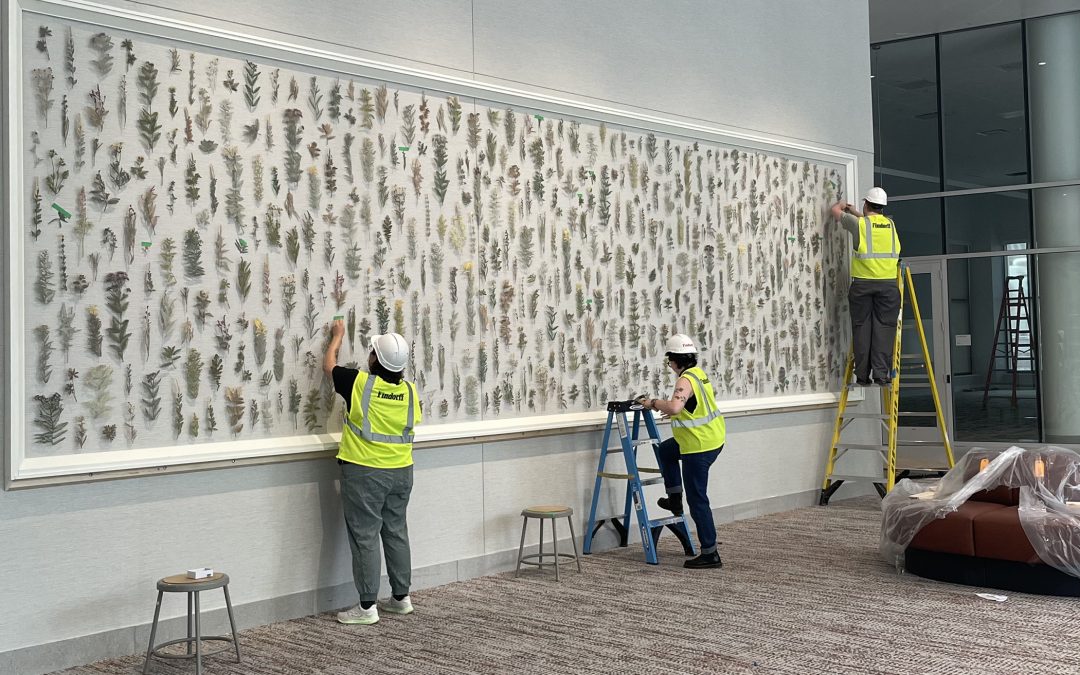
This summer, I traveled to Madison, Wisconsin, to install two large-scale works in the new CDIS (Computer, Data & Information Sciences) building at the University of Wisconsin-Madison. Working alongside an amazing team of students and staff from the CDIS School, I spent several days transforming interior spaces with embroidered botanical forms inspired by Wisconsin’s native prairie plants. We were even able to squeeze in a visit to the Herbarium.I am delighted that the pieces have found a home on the University’s campus.
These installations build on work I originally created in 2019, which previously hung in the Chazen Museum of Art. That project began with research visits to two campus collections: the Wisconsin State Herbarium, where I studied preserved botanical specimens, and the Helen Louise Allen Textile Collection. I’ve long been interested in how botanical forms migrate between scientific documentation and decorative traditions—how the same flowers appear on herbarium sheets, in textile patterns, and on wallpaper designs. These collections allowed me to trace those connections through Wisconsin’s indigenous plant species.
For the CDIS building, I adapted these two pieces:
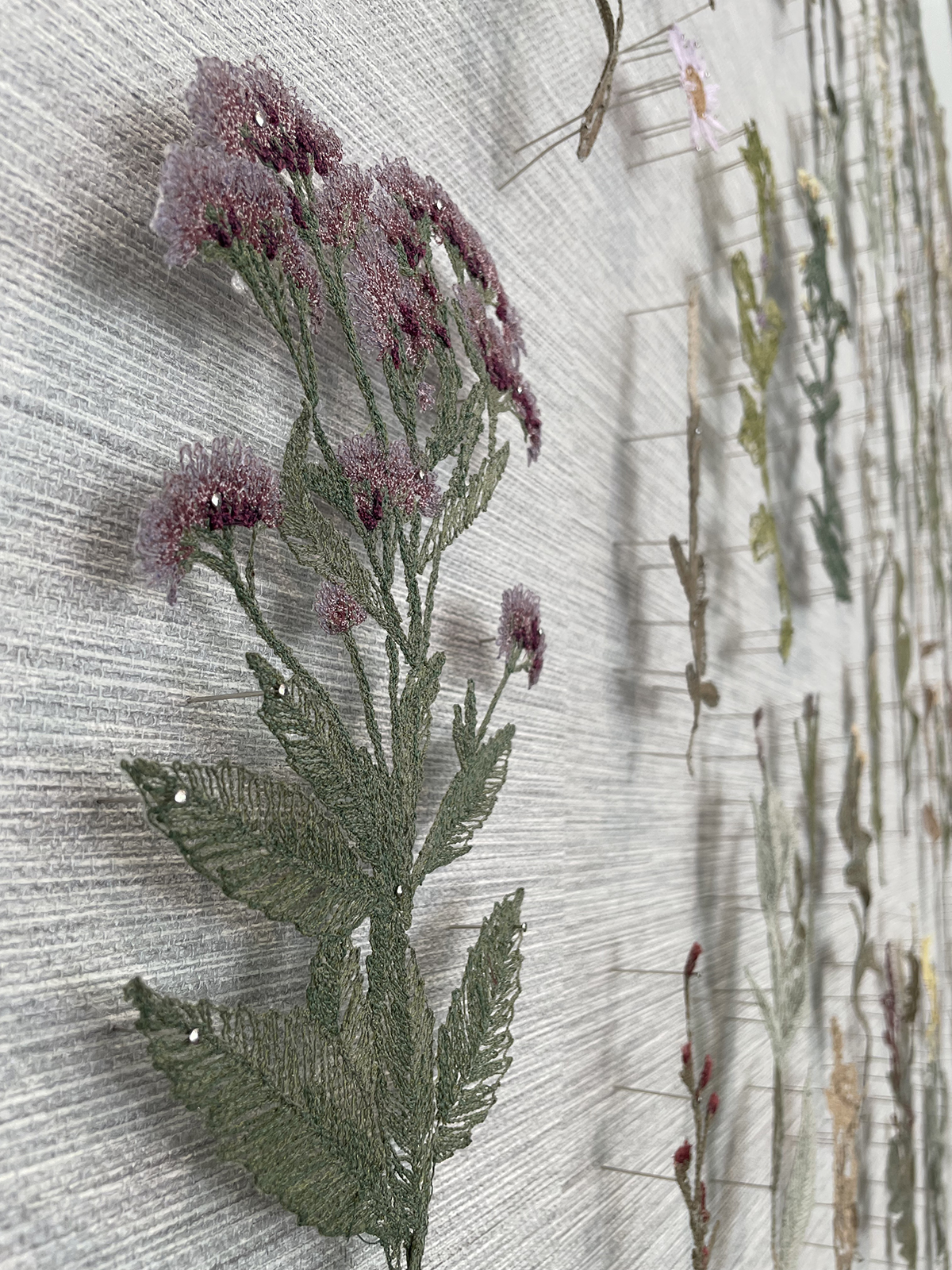
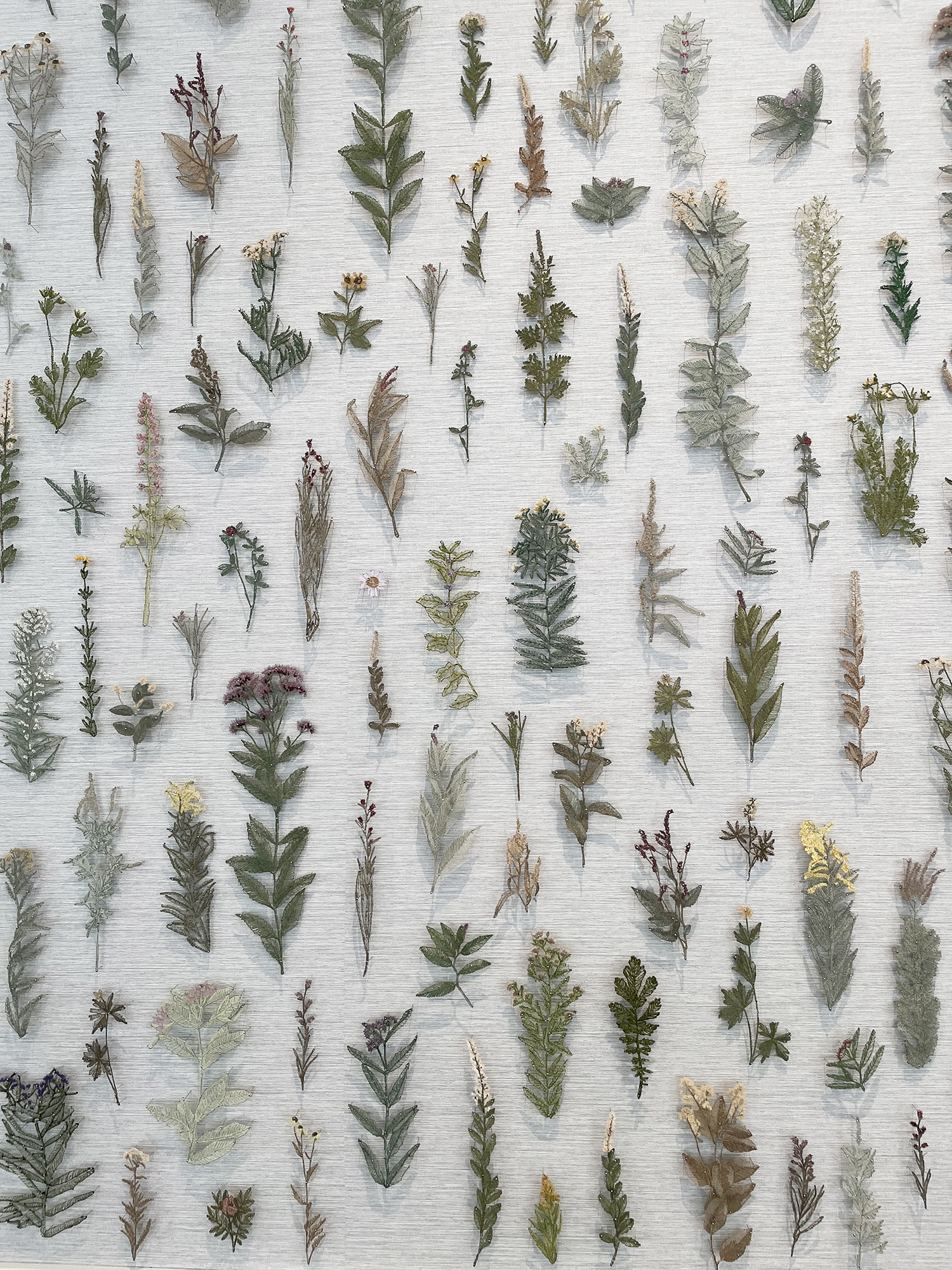
Prairie Plant Studies is a 25-foot wide installation located near the Orchard Street entrance of Morgridge Hall, across from Hello World Auditorium. This wall of embroideries recreates pressed flowers indigenous to the Wisconsin prairie—goldenrod, milkweed, and other native species I studied at the State Herbarium. Each piece is made using my water-soluble fabric technique: I sew into fabric that dissolves in water, building up stitched lines and crossing threads. When the fabric dissolves, the thread drawings interlock together without any backing, held together purely through their accumulated connections. I love this parallel to prairie plant ecologies themselves—biological networks where individual species sustain each other through invisible underground relationships.
Ode to a Prairie takes a different approach, transforming botanical studies into monumental forms. A series of 30-foot sheer banners hangs near the northeast entrance off University Avenue, extending from the first floor down to the basement level. The work plays with scale and transparency, turning small herbarium specimens into large-scale installations that shift between delicate detail and architectural impact as viewers move through the space.
Installing these pieces required careful planning and collaboration. I was privileged to work with a team of students and staff to install the work in the building. There’s something special about working with students and staff who are genuinely invested in bringing a project to life. Their energy and dedication made the installation not just successful, but genuinely enjoyable.
These works feel particularly meaningful given Wisconsin’s prairie history. The state’s prairie environment was almost completely destroyed by decades of farming, and there’s now a growing movement to restore these indigenous plant communities. By referencing species like goldenrod and milkweed—plants that once covered the landscape—the installations function as both memorial and possibility, acknowledging loss while gesturing toward restoration.
I designed these pieces specifically for the CDIS building’s role as a space for learning and collaboration. As students, faculty, and visitors move through these areas, I hope the work invites them to consider their relationship to indigenous plant communities and to the land beneath the built environment. The prairie may be largely gone from the physical landscape, but perhaps it can persist in other forms: in herbarium collections, in collective memory, in contemporary art, and in ongoing restoration efforts.